

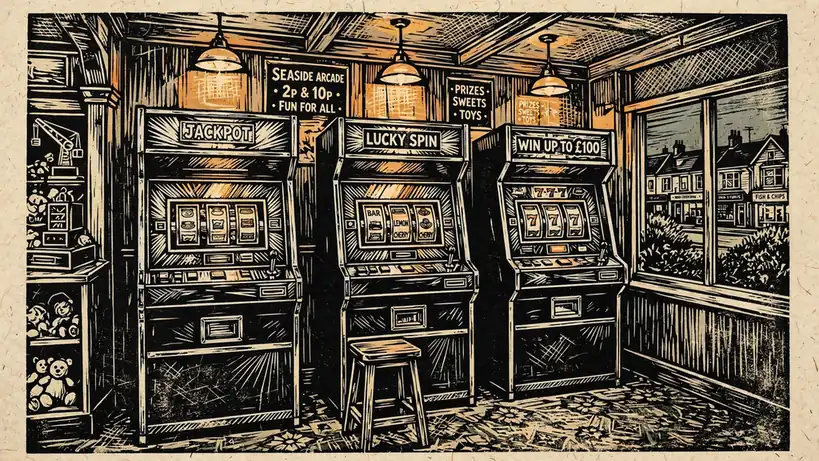
A three-reel layout identifies a slot format, but questions about returns and play require information about the individual game.
What a Three-Reel Slot Can—and Cannot—Tell You
The phrase “three-reel slot” identifies a format, not a verdict. It does not establish that a game is better value, more enjoyable or more suitable than another slot. Nor does the word “classic” settle those questions. A description can help narrow the subject, but a recommendation needs evidence about the individual game and the terms under which it is offered.
That distinction matters when weighing claims about the best three-reel slots in the UK. “Best” is a comparison, and a comparison needs a consistent basis. A short title, familiar styling or simple presentation may explain why a game attracts interest; none, by itself, demonstrates how it performs. Without comparable information about named games, a ranked list would imply a level of certainty the evidence cannot support.
A more useful assessment separates what can be inferred from the format from what needs to be checked game by game. The format tells the reader that the subject is a particular kind of slot. It does not answer questions about the chance of a return, the amount of any return, or the likely course of play. Those are not cosmetic details. They determine whether the financial terms match the impression created by the game’s presentation.
For any slot, the relevant comparison is between its documented terms and the expectations those terms create. A game’s appearance cannot substitute for information about its mathematical design. Nor does a familiar style make a game predictable: visual simplicity is not evidence that outcomes are easier to anticipate or that losses are smaller. A claim that a title is “best” should therefore be treated as a conclusion requiring support, not as a property conveyed by its category.
The same discipline applies to reviews. A description may be useful for identifying a game or explaining its interface, but praise is not a calculation. If several titles are being compared, the basis should be stated and should apply consistently to each one. Otherwise, a ranking may reflect presentation or editorial preference rather than a measurable difference. Where the comparison cannot be made on like-for-like terms, a confident order of merit adds polish, not information.
Best RTP Casino Slots UK: Understanding Returns
For online three-reel games, the online setting also does not settle the game’s value. It says where the game is accessed, not what its financial terms are. A title available through a website may still require separate checks of its rules and the information supplied for that specific game. The category and the channel are labels; neither is a substitute for the detail that determines a financial decision.
There is a practical limit to what a broad category can tell a reader. It cannot identify a winning title, predict a result or show how much a session will cost. No slot label removes the uncertainty attached to individual outcomes. A recommendation that treats format as a shortcut to those answers is making the category do work it cannot do.
That does not make the category useless. It provides a clear boundary for comparison: three-reel games can be considered together as a subject, while conclusions about a specific title must rest on information about that title. This is a narrower claim than calling one game the best, but it is also more defensible. A useful guide can explain what belongs in the comparison and what should not be inferred from the label alone.
The name of a game can be a starting point for checking its published details, not evidence in itself. Likewise, a favourable description may prompt further scrutiny, but it does not establish a financial advantage. The question is not whether a game looks traditional, popular or easy to understand; the question is whether the information available supports the claim being made about it.
Accordingly, “best” is not a neutral synonym for “three-reel”. It requires a stated measure and evidence that can be compared across titles. Without that, the sound conclusion is limited: the format defines the kind of game under discussion, while the merits of any particular game remain a separate assessment. A precise boundary is more useful than a confident ranking with no common basis behind it.
Highest-RTP Slots in the UK: Understanding RTP
Three-Reel Games and the Machine Format
“Three-reel game” describes a slot by the number of reels shown in its play area. “Three-reel machine” uses the same idea but frames it as a machine or cabinet. In online contexts, both labels can refer to a digital game rather than a physical piece of equipment. The wording changes; the basic classification does not.
That distinction matters because a machine is not the same thing as a game’s complete rules. The reels are the visible format. They do not, by themselves, establish how symbols are evaluated, what combinations qualify for a return, or what other mechanics are included. Those details belong to the individual game rules, not to the three-reel label.
The term also does not identify a particular supplier, title or set of features. Two games with the same reel count may differ in their presentation and rules. Conversely, a game’s name or artwork is not enough to determine its reel format. The play area is the relevant evidence: count the reels shown, then check the game information for the rules attached to them.
This makes “three-reel slots” a useful category, but a narrow one. It can describe the layout without saying whether the game has a special feature, how its symbols behave or what a completed spin can return. Treating the label as a specification would be like treating the number of pages in a contract as its payment terms: one fact is visible, but it does not settle the rest.
The same care applies to the word “machine”. In land-based gambling, it naturally suggests a physical device. Online, it is often used more loosely to mean a slot game presented on a screen. It does not prove that the online version reproduces a particular cabinet, nor that a physical counterpart exists. The label identifies the type of game being discussed, not its history or hardware.
The phrase “three-reel slot features” can therefore be misleading if it implies a standard feature set shared across the category. Reel count alone does not establish bonus rounds, special symbols, multipliers, jackpots or other mechanics. Any such claim needs to be checked against the rules for the specific title. Without that information, the reliable description stops at the format.
Bonus Buy Slots UK: How the Feature Works
The terms “game” and “machine” are often interchangeable in casual descriptions, but they are not always equally precise. “Game” is the clearer choice for an online title because it refers to the playable product. “Machine” may be useful when discussing a physical slot cabinet, or when using a familiar general label, but it can suggest equipment that is not present in an online setting.
A three-reel game can be encountered through different interfaces, yet access method does not change the classification. A screen-based version remains a game with three displayed reels; calling it a machine does not turn it into a physical cabinet. The distinction is straightforward, even when the wording is not.
For UK readers, the phrase “three-reel machines” may bring to mind familiar slot terminology, but it does not establish that every game is available in every setting or on every platform. Availability is a separate question from format. The same applies to online listings: a category label is a starting point for identifying the layout, not evidence of a particular game’s rules or suitability.
A precise description keeps these points separate. Reel count describes the visible arrangement. “Game” or “machine” indicates how the product is being referred to. The title’s rules determine its mechanics. None of those labels should be made to carry information that belongs to another.
Real-Money Play, UK Limits and Licensing
A three-reel game played for real money involves a stake that can be lost and, where the game awards a win, a payout in real funds. The reel count does not change the regulatory framework. The relevant questions are whether the operator is authorised to serve the market and what stake conditions apply to the game.
A specialist gambling review reports a Great Britain limit of £5 per online slot game cycle for customers aged 25 and over, and £2 for those aged 18 to 24. These figures concern the total stake in a cycle, not a separate allowance for each reel. They apply to online slots; they should not be read as a general casino stake limit or as a statement about roulette and blackjack.
Casino Games: Slots, Live Tables and Online Formats
The regulator responsible for commercial gambling in Great Britain is the UK Gambling Commission. Its remit covers remote gambling offered to consumers in Great Britain even where the operator’s key equipment is located elsewhere. An overseas location therefore does not, by itself, remove an operator serving this market from the Commission’s regulatory framework.
The Commission issues operating licences to businesses and personal licences to individuals working in relevant roles. For a customer, the practical distinction is between a business holding the required operating licence and one that does not. A site’s presentation, game catalogue or claims about a three-reel title do not substitute for that authorisation. Online gambling in the UK is legal only through licensed and regulated sites, and a legal online casino serving UK players must hold a current operating licence.
Age verification is required before an operator allows a customer to deposit funds into a gambling account. Online gambling is legal for people aged 18 and over when the operator holds a UK Gambling Commission licence. That age condition and the stake limits are separate checks: meeting the age requirement does not remove the applicable limit for a customer’s age group.
For anyone comparing real-money three-reel games, the commercial calculation starts with the amount placed at risk per game cycle, not the appearance of the reels. A displayed stake must be understood as the total amount committed to that cycle. If an offer, interface or game description leaves that amount unclear, the prospective cost is unclear too; a familiar fruit-machine style does not make the figure self-explanatory.
A more defensible assessment separates what can be checked—the operator’s licence, the stated stake and the game’s own displayed terms—from promotional language. Real-money play is a financial transaction, not merely a choice of visual format.
The same distinction matters when a site offers play without registration. A no-registration option does not establish that real-money gambling is available, that a payout can be claimed, or that the operator has the required licence. Those are separate conditions. Before depositing, the licence number should be checked against the UK Gambling Commission’s public register; an operator’s own claim is not the register itself.
Low-Volatility Slots in the UK: How Returns Work
The rules also apply at operator level, not only at the point where a spin begins. A licensed business serving Great Britain is within the Commission’s remote-gambling oversight regardless of where its equipment sits. That makes the licence status a more useful starting point than a title’s “classic” or three-reel label: format describes the game, while authorisation determines whether the business may lawfully offer it to the market.
Free Online Play Is Not a Cash Payout
Free online three-reel slots use a play balance with no cash value. Any amount displayed in that balance is part of the game, not money held for a player. A win may change the on-screen total, but it does not create a cash entitlement or a balance that can be withdrawn.
That distinction matters when an old-fashioned three-reel game is available in a free version. Its presentation may resemble a casino game, and the result may be shown as a win, but the appearance does not alter the terms: free-play credits are not real funds. A larger displayed total remains a game result, not a payout.
Free online 3 reel slots can therefore be useful for seeing how a particular game behaves on screen without staking real money. They can show the sequence of play and the way the game presents outcomes. They do not establish that the same results, balance changes or experience will apply when real funds are involved. Free mode is a separate play condition, not a route from a practice balance to a cash return.
The same limit applies to free classic 3 reel slots. “Classic” describes a style or category of game; it does not turn free credits into withdrawable funds. Nor does a game’s age or familiar appearance create a special cash value for a result earned in free mode. The account may show a balance, but the relevant question is what that balance represents. In free play, it represents game credits only.
A search for high payout 3 reel slots can blur two separate ideas: the size of a result shown during play and money actually paid out. A free game can display a substantial-looking win, yet the display is not evidence of a cash payment. The amount has no cash value when it is generated from a free-play balance. Labels such as “win” or “payout” on the game screen describe its internal result; they do not change the status of the credits.
High-Volatility Slots UK: How Returns Work
There is no method for how to win on 3 reel slots that makes free-play results payable. A winning combination in free mode remains a free-play result. Repeating a sequence, building the displayed balance or moving between sessions does not convert those credits into money. The arithmetic is straightforward: a balance with no cash value cannot produce a cash withdrawal.
For an online casino 3 reel slot, the word “free” should be read as a description of the play balance, not as an introductory cash prize. Unless real funds are being staked under a real-money offer, there is no cash payout to collect from free-mode play. The distinction is not a technicality in the wording; it determines whether the displayed result has monetary value at all.
Free play can answer limited questions about the game’s presentation. It cannot demonstrate a cash return, guarantee a future result or establish that a player has earned money. The balance is part of the entertainment, and its final value outside the game is nil.
Playing Online: Free Mode and Real-Money Mode
An online three-reel game can be presented in a free mode, a real-money mode, or both. The reels may look the same, but the financial arrangement is different: free mode uses a balance with no cash value, while real-money mode puts actual funds at risk and can provide cash payouts. The screen alone does not tell which arrangement is active; the displayed balance and the mode selected do.
In free mode, a displayed win changes the game balance, not a player’s bank balance. The balance is not withdrawable, and it cannot become a cash payout simply because a winning combination appears. That makes free play useful for seeing how a game behaves on screen, but it does not reproduce the financial result of staking real funds. A simulated balance has no personal cost when it falls and no cash value when it rises.
Real-money play changes the calculation. A stake comes from real funds, and a payout may be available when the game awards one under its rules. A win is therefore not equivalent to a free-mode balance increase; a loss is not merely a change to a simulated figure. The same visual result can carry a different financial consequence depending on the mode.
Live Casino UK: Games, Rules and Offers
For anyone comparing ways to play three-reel slots online, the decisive detail is not whether the game is described as classic or whether its reels appear familiar. It is whether each play uses money that can be lost, and whether any resulting balance can be paid out. The label “classic” does not establish that a game is free, and “online” does not establish that it is real-money play. Those details belong to the mode and its terms, not to the reel format.
Free access without registration should not be assumed from the words “free play”. A game may be available without an account, or access may depend on the site’s conditions. In either case, free play remains distinct from a cash game: an account-free demonstration, where offered, does not create an entitlement to withdraw a simulated balance. The absence of a registration step does not change what the displayed credits represent.
A sensible comparison keeps the two modes in separate columns. For free play, the relevant question is what can be learned from a simulation, with no cash payout attached. For real-money play, the relevant questions are what funds are at risk and what the operator’s rules say about payouts. Combining the balances would produce a misleading total: simulated credits and real funds are not interchangeable units.
That distinction matters even when the same three-reel layout appears in both modes. Free play demonstrates an interface; real-money play creates a financial outcome. No visual resemblance can erase the difference between a balance that cannot be withdrawn and funds that may be lost or paid out.
Fruit Machines, Paylines and the Limits of the Available Evidence
“Fruit machine” is a familiar label for a slot-style game, not a specification of how its reels or wins are configured. Calling an online game a three-reel fruit machine identifies a broad format. It does not establish the game’s payline arrangement, the chance of a particular result or the value of a winning combination.
That distinction matters because reel count alone cannot settle the mechanics. A payline is a route across the reels on which a symbol combination may qualify for a win. The number and layout of qualifying routes are properties of the individual game, not facts that can be read from the phrase “three-reel”. A display with three reels does not, by itself, reveal whether a game uses one line, several lines or another arrangement.
Online Slots Payout Percentage: Understanding RTP
The rules for a particular title need to be read separately. Its paytable or game information is where the applicable winning combinations and line conditions should be stated. Without those details, assigning a payline count would be guesswork. The same applies to assumptions that a traditional-looking fruit-machine theme must use a particular layout. Appearance is not a rulebook.
Odds need the same separation from presentation. The reel count does not tell how likely a winning combination is, nor does it establish how much that combination pays. Those are different parts of the calculation: probability concerns how often an outcome occurs; the award concerns what the game credits when its conditions are met. Knowing one does not provide the other. A list of symbols or an illustration of a winning line is not enough to calculate either.
The term “odds” can also be used loosely to mean several things: the chance of a win, the chance of a specific combination, or the relationship between a stake and an award. Those measures are not interchangeable. A game may show winning combinations without making their probability clear, and a stated award does not reveal the frequency of the outcome. A meaningful comparison therefore requires the relevant rules and probability information for the title, not a general claim about three-reel games.
The same caution applies when a fruit-machine-style game is offered online or in a free mode. The label describes the game category; it does not supply missing mechanical details. Nor does a familiar visual style prove that one title follows the rules of another. Similar symbols can sit within different game rules, so conclusions should remain tied to the specific title being examined.
For anyone comparing three-reel slot machines online, the useful checks are precise: identify the game’s stated paylines, read which combinations qualify, and distinguish the award shown from the probability of receiving it. If those details are not available, the responsible conclusion is limited. The game can be described as a three-reel fruit-machine-style slot, but its paylines and odds cannot be inferred from that description alone.
No-Download Play and the Difference from Video Slots
A three-reel slot available without a download is accessed through a browser rather than installed as a separate application. That describes how the game is opened, not what its reels, pay structure or play mode are. Availability can depend on the site and the device; “no download” is not a specification of the game itself.
UK Casino First-Deposit Bonuses: How to Compare Offers
The same distinction applies to free 3 reel slots. A browser-based version may be offered without requiring a deposit, but those words describe access or an account condition, not a guaranteed feature of every game. They do not establish that a title can be played in a particular mode, or that it awards cash. The format and the terms attached to a particular offering are separate matters.
The comparison between three-reel slots and video slots also needs a narrow definition. “Three-reel” identifies a reel count. “Video slot” describes a game category; the labels do not, by themselves, provide a complete description of a game’s mechanics. A video slot may have a different reel layout, but the category name alone does not establish how many reels it has or how its wins are calculated.
One concrete contrast is possible: in a five-reel slot, a stake may be applied across the full set of reels. That tells nothing about the paylines, odds or stake arrangement of a three-reel title. Reel count is not a substitute for a game’s rules, and a visual resemblance to a traditional machine does not fill in those details.
For browser play, the practical check is whether the selected title opens in the available interface without an installation step. That is an access question. Whether the game is a three-reel slot or a video slot remains a separate classification, and neither label establishes the terms of play.
“No download” therefore answers a limited question: whether separate software installation is needed for access. It does not identify the game’s mechanics, prove that a deposit is unnecessary, or turn one format into another. Those distinctions matter because an access label can sound like a game description while supplying no information about the underlying rules.
The Three-Reel Slot as a Format
A three-reel slot is defined by its basic layout: the game presents three reels, with symbols shown in rows as they stop. The term describes the format, not a promise about how a particular game works. It does not, by itself, specify the symbols used, the rules for forming a win or the value attached to any result.
That distinction matters because a familiar layout can make different games look more alike than their rules are. The reel count is visible; the conditions for a payout are set by each game. Those conditions determine which displayed outcomes count, while the format label alone does not explain them. A three-reel layout therefore offers a useful way to classify a game, but not a complete description of its terms.
The label also says nothing by itself about whether play is free or involves real funds. Those are separate conditions of access and play, not consequences of having three reels. Nor does the format establish that a game is a traditional physical machine reproduced online. The same broad label can be used to describe an online game, while its exact presentation and rules depend on the individual title.
For comparison, a 5 reel slot game uses five reels, and a bet can be applied across all five. That contrast concerns layout and bet structure; it does not establish which format is more favourable. A reel count is a classification, not a measure of value.
The practical meaning is narrow: “three-reel” identifies the number of reels in the game’s presentation. It is a starting point for describing the format, not evidence of a particular payout pattern, winning frequency or advantage. Those questions require the rules and terms of the individual game.
What “Classic” Means in a Three-Reel Slot
“Classic” is a label, not a complete specification. Applied to a three-reel slot, it signals how the game is presented, but it does not by itself establish the rules, payout structure or other mechanics. Two games carrying the same label may still differ in ways that matter to a player.
The word should not be treated as evidence that a game is old, mechanically simple or more predictable. Nor does it tell anything reliable about how often winning combinations occur or how much a game returns over time. Those are properties that require information about the individual game, not an adjective in its name or description.
The distinction matters when comparing titles. A classic presentation may be part of a game’s identity, while the financial terms depend on its actual rules and settings. Without those details, the label cannot support a claim that one title offers better value, lower risk or a particular playing experience. A familiar-sounding name is packaging; the conditions determine the calculation.
The same caution applies to the phrase “classic three-reel slot”. It identifies a broad category of presentation and format, not a promise that every game in that category shares the same features. The label may help describe what a game is intended to evoke, but it cannot substitute for its rules or independently verified specifications.
Accordingly, “classic” is useful as a first description, not as a basis for ranking games. Any comparison that goes further needs title-specific evidence. Without it, the sound conclusion is limited: the game is being described as classic, and the label alone says no more.
Classic Slots and Video Slots Are Different Formats
“Classic” and “video” describe slot categories, not a scale of quality or value. Neither label establishes that a game is more rewarding, cheaper to play or more likely to produce a return. Those conclusions depend on the individual game’s terms, not its category name.
The labels can help distinguish how a game is presented, but they are not a complete specification. A classic-style title is not automatically limited to a particular reel count, and “video slot” does not by itself tell what a game’s paylines, odds or payout structure are. Treating the category as a substitute for those details leaves the cost and return calculation unfinished.
Reel count can affect how a stake is applied. In a five-reel slot, a player may place a bet that covers all five reels. That describes one possible arrangement; it does not establish how any classic or video title calculates its stake, or whether a particular game uses that setup.
The practical comparison is therefore narrow. The format label identifies a broad type of slot, while the game’s own rules determine the mechanics that matter for a session. A familiar-looking design does not prove that the underlying terms are simple, and a more elaborate presentation does not prove that the game offers better value. Without title-specific terms, neither category can support a reliable ranking.
For a cost comparison, the relevant figure is the stake required for each game cycle and the way a selected bet is applied. For a return comparison, the applicable payout information matters. “Classic” and “video” alone supply neither calculation. They are useful labels for sorting formats, not evidence that one side of the comparison is financially preferable.