

What Counts as Bonus Abuse
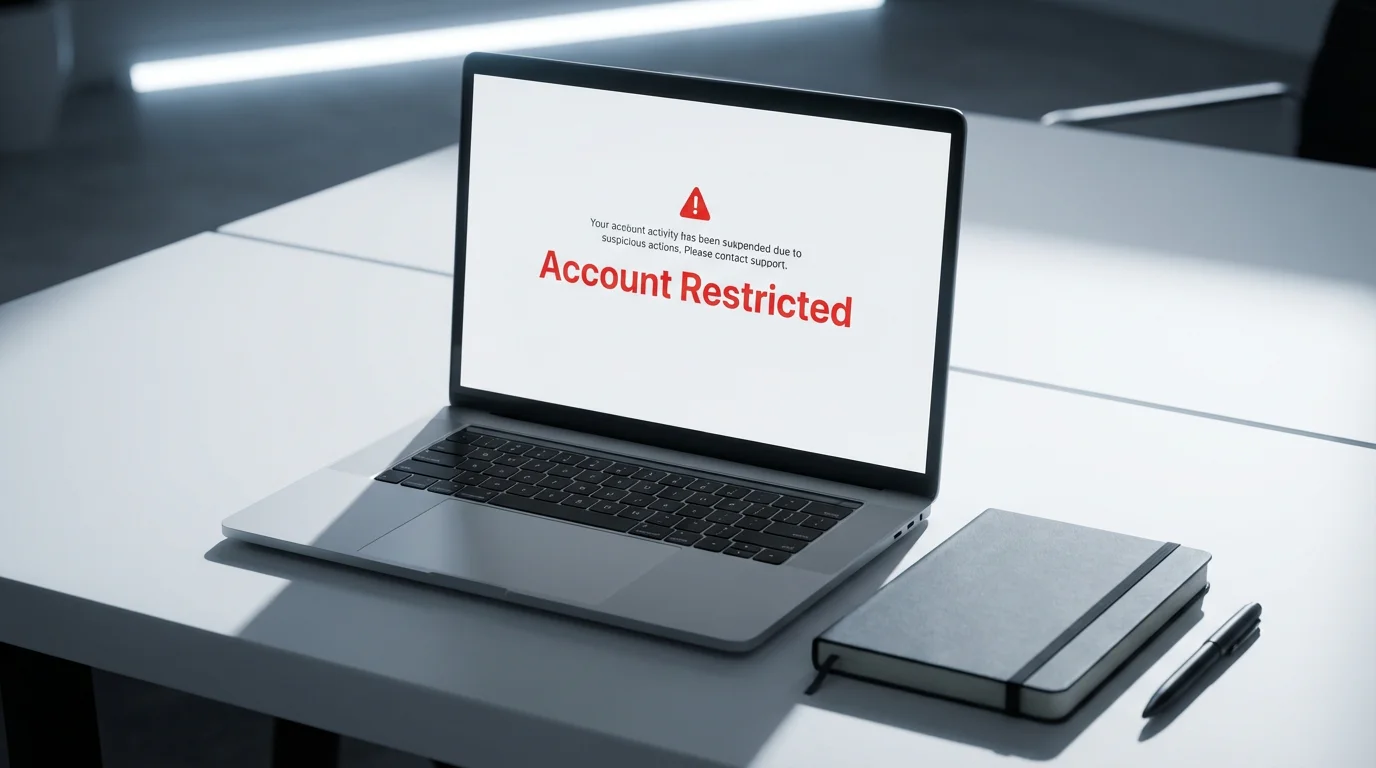
Casino bonus abuse is a broad term that covers any behaviour the operator considers to be exploitation of their promotional offers beyond their intended purpose. The definition is deliberately elastic — casinos write their terms and conditions with enough latitude to classify a range of player behaviours as abusive, and the consequences can include bonus confiscation, account closure, and forfeiture of all balances including deposited funds.
The clearest form of abuse is multi-accounting: creating more than one account at the same casino to claim the same no deposit bonus multiple times. This is universally prohibited, explicitly stated in every casino’s terms, and actively detected through a combination of identity checks, IP address monitoring, device fingerprinting, and payment method matching. There is no ambiguity here — multi-accounting is a violation at every UKGC-licensed operator, and it carries severe consequences.
Beyond multi-accounting, the definition becomes murkier. Some operators classify “bonus hunting” — signing up at a casino solely to claim and clear a no deposit bonus with no intention of depositing — as abuse. This is a subjective judgment, because there’s no inherent obligation for a player to deposit after claiming a free promotion. But operators reserve the right to restrict or close accounts that exhibit patterns they interpret as pure bonus exploitation, and “patterns” is a term with considerable interpretive flexibility.
Irregular play patterns can also trigger abuse flags. Placing bets that are designed to minimise risk rather than engage with the game — such as betting on both red and black in roulette to hedge the outcome — is specifically prohibited in most bonus terms. Low-risk betting strategies that the casino considers designed to clear wagering with minimal balance erosion may be flagged as abusive, even if the player is simply trying to play efficiently.
Exceeding the maximum bet limit during bonus play is treated as a form of abuse at some casinos, even when it’s accidental. The terms state a maximum bet (typically £5 per spin), and any bet above that threshold — whether deliberate or the result of not checking the limit — can void the bonus and all accumulated winnings. This is one of the most common triggers for bonus confiscation, and it catches players who didn’t realise the limit existed far more often than it catches players who were deliberately trying to exploit the system.
Multi-Accounting and Its Consequences
Multi-accounting is the most commonly pursued form of bonus abuse, and the detection methods casinos employ are more sophisticated than most players assume. When you register at a UKGC-licensed casino, the operator collects your name, date of birth, address, email, phone number, and payment details. These data points are cross-referenced against existing accounts in real time. But the matching doesn’t stop at the information you provide.
Device fingerprinting identifies the specific hardware and browser configuration you’re using — screen resolution, installed fonts, operating system version, browser plugins, and dozens of other technical markers that combine to create a near-unique identifier. IP address analysis tracks your network location and flags accounts sharing the same connection. Cookie and local storage analysis detects when the same browser has been used to access multiple accounts. Even clearing your cookies and using a VPN leaves traces that sophisticated detection systems can correlate.
The consequences of getting caught are comprehensive. The duplicate accounts are closed. All bonuses, winnings, and deposited funds across those accounts are confiscated. Your identity is flagged in shared industry databases, which can affect your ability to register at affiliated casinos under the same operator group. In serious or repeated cases, the casino may report the activity to the UKGC, which maintains oversight of player behaviour patterns that suggest organised bonus abuse.
The financial risk is entirely asymmetric: the potential gain from claiming a £2 no deposit bonus twice is negligible, while the potential loss — forfeiture of legitimate winnings, account closure, and reputational flagging across the industry — is substantial. Multi-accounting is never worth the risk.
Where the Line Sits
The uncomfortable truth about bonus abuse policies is that the line between acceptable and abusive behaviour is drawn by the casino, not by an independent standard. Operators have broad discretion in interpreting their own terms, and “bonus abuse” can be defined to include behaviour that most players would consider perfectly reasonable.
Claiming a no deposit bonus, clearing the wagering requirement, withdrawing the maximum cashout, and never depositing is not abuse by any objective standard — you’ve followed the rules exactly as written. But some operators treat this pattern, repeated across multiple promotions or identified as the player’s sole activity, as grounds for account restriction. The justification is typically a clause in the general terms that reserves the operator’s right to restrict accounts engaged in “promotional abuse” or “unfair advantage play” — phrases that are broad enough to encompass almost any behaviour the operator finds commercially inconvenient.
This creates an uneasy dynamic. Players are offered free bonuses and told to read the terms. They read the terms, follow them precisely, and extract value within the rules. Then the casino, finding that the player has been too efficient, classifies their behaviour as abuse. The player has done nothing wrong by any reasonable interpretation — but the casino’s terms give it the final word.
The practical defence is simple: play normally. Use bonus funds on games you enjoy, at bet sizes that reflect genuine engagement, and accept the outcomes — wins and losses — as they come. Don’t use automated software, don’t hedge bets, and don’t create multiple accounts. Beyond that, the line is the operator’s to draw, and your only protection is choosing casinos whose terms are clear, whose enforcement is fair, and whose reputation for handling bonus disputes is documented in player reviews.
Play Smart, Not Sneaky — The House Always Finds Out
The detection systems casinos use are built by teams whose sole job is identifying bonus abuse. They have access to your complete play history, your device data, your network information, and pattern recognition systems trained on millions of player sessions. You are not going to outsmart a system designed specifically to catch the behaviour you’re attempting. This isn’t a challenge or a dare — it’s a statement of technological reality.
Playing smart means something different from playing sneaky. Smart play is choosing high-RTP games for wagering, reading terms before claiming, selecting offers with favourable caps and reasonable wagering (now capped at 10x under UKGC rules effective January 2026), and treating the no deposit bonus as a genuine trial of the casino. Sneaky play is creating fake accounts, using VPNs to circumvent restrictions, and exploiting technical loopholes in bonus systems. The first approach is sustainable, respectable, and productive. The second is short-lived, risky, and ultimately unprofitable.
The best bonus players in the UK market extract value through knowledge, not deception. They understand RTP, volatility, contribution rates, and wagering mathematics. They compare offers methodically. They claim only at casinos whose terms they’ve read and assessed. And they operate transparently, with a single account at each casino, playing games they’ve chosen strategically within the rules. That approach produces consistent results over time — modest but real — and it never puts your funds or your reputation at risk. The house edge is the casino’s built-in advantage. Knowledge is yours. Use it instead of tricks.