

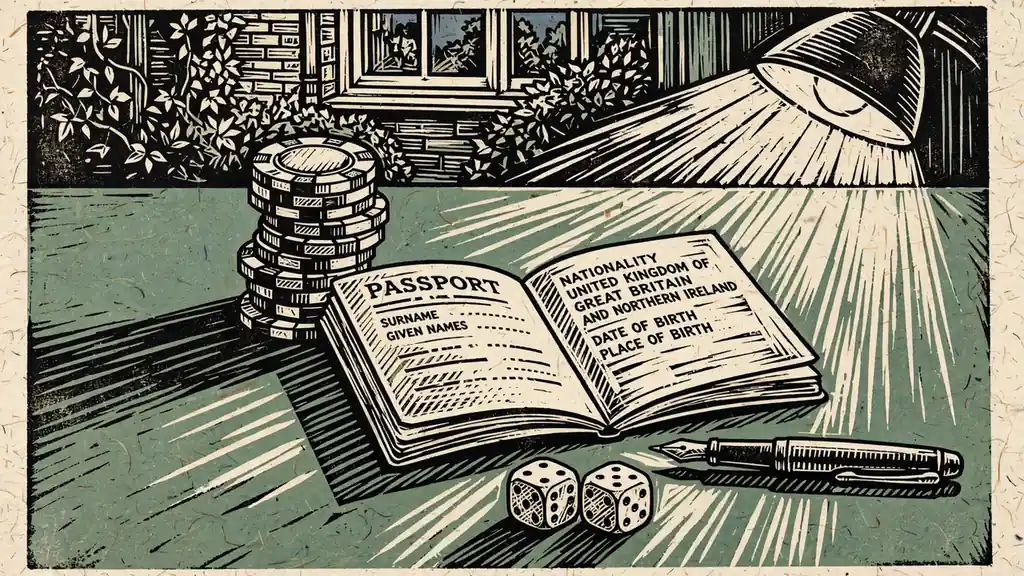
The guide explains how overseas authorisation differs from UK Gambling Commission oversight and what that can mean for player protections.
What “Non-UKGC” Means—and Which Licences May Appear
A non-UKGC casino is an online gambling site that operates without oversight from the UK Gambling Commission. The label describes its relationship with that regulator; it does not identify a particular company, game range or style of website. In ordinary use, “non-UK-regulated casino” is a clearer description than “non-UKGC”, because it states that the distinction is regulatory rather than a feature of the casino itself.
The wording can be easy to misread. “Non-UKGC” does not mean that a casino has no licence at all. Some sites in this category hold authorisation from a jurisdiction outside the UK. Malta, Curaçao, Gibraltar and Anjouan are among the places whose licences may be associated with these operators. The important distinction is which authority provides oversight: a licence from one of those jurisdictions is not a UK Gambling Commission licence.
That distinction also explains why the terms “UKGC-licensed casino” and “non-UKGC casino” are not interchangeable descriptions. The first identifies a site overseen by the UK Gambling Commission; the second refers to one that operates outside that Commission’s oversight. A site may present itself as licensed elsewhere while still belonging to the second category. The location or name of a licence authority therefore changes the description, even when both sites are online casinos.
What the label does—and does not—describe
“Non-UKGC” is a broad category, not the name of a single licensing system. It groups together sites that share one feature: they are not overseen by the UK Gambling Commission. The other authority, where one applies, can differ from site to site. Malta, Curaçao, Gibraltar and Anjouan are examples of jurisdictions that may appear in connection with such casinos; their names should not be treated as alternate labels for the UK regulator.
The term also does not describe the casino’s ownership or where its website is hosted. Those details are separate from the question of regulatory oversight. A casino’s public-facing name may not itself reveal which authority, if any, is responsible for its licence. For clear terminology, the relevant distinction is between oversight by the UK Gambling Commission and oversight outside that system—not the branding used on the site.
Non-GamStop Curaçao Casino Sites: What to Check
This is why a phrase such as “foreign-licensed” can be imprecise on its own. It may indicate that an authority outside the UK is involved, but it does not say which one. Naming the jurisdiction gives a more specific description: for instance, a casino may be described as licensed in Malta or as holding an Anjouan licence, if that is the authorisation it claims. These descriptions still do not make the casino UKGC-licensed.
Licence names in context
A search for UKGC-licensed online casinos is asking about a different category from a search for non-UKGC casinos. The first concerns casinos overseen by the UK Gambling Commission; the second concerns online casinos outside its oversight. A list of UKGC-licensed casinos and a list of casinos licensed in other jurisdictions would therefore answer different questions. Treating both as one general list of “licensed casinos” removes the distinction that the labels are meant to convey.
The jurisdiction names can also appear in different forms. Malta is associated with the Malta Gaming Authority, Curaçao with Curaçao eGaming, and Gibraltar with the Gibraltar Regulatory Authority. Anjouan may be named as the licensing jurisdiction. These names help describe the type of authorisation being referred to; they do not change the meaning of “non-UKGC” when the casino is not overseen by the UK Gambling Commission.
The phrase “non-UKGC licensed casinos 2026” is consequently best read as a reference to casinos whose licensing, where present, is outside the UKGC system. It is not a separate licence category issued by the Commission, nor does “licensed” in the phrase mean “licensed by the UKGC”. The wording combines two ideas: an online casino may have a licence, and that licence may come from a jurisdiction other than the UK regulator.
In precise usage, the regulator and jurisdiction should be named rather than hidden behind a broad label. “Non-UKGC” establishes only that UK Gambling Commission oversight is absent; the additional name—Malta, Curaçao, Gibraltar or Anjouan—identifies the jurisdiction that may be connected to the casino. The distinction is terminological, but it matters: a licence from another jurisdiction and a UKGC licence are different descriptions, not alternative spellings of the same status.
"Non-UKGC" is a broad category describing casinos not overseen by the UK Gambling Commission; they may hold licenses from other jurisdictions such as Malta, Curaçao, Gibraltar, or Anjouan.
The UK Legal Position: Operator Duties and Player Liability
For real-money online gambling offered to customers in England, Scotland or Wales, the licensing duty rests with the operator. A company must hold a UK Gambling Commission licence to serve the Great Britain market, whether it is based in Britain or elsewhere. Its location does not remove that requirement.
This is the dividing line between a UKGC-regulated online casino and a site operating outside UKGC oversight. A casino may hold permission from a regulator in another country, but that permission is not a substitute for the British operating licence. If the operator accepts customers in Great Britain without the required UKGC licence, it is the operator that is failing to meet the market’s licensing rules.
That distinction matters because the law does not treat the operator’s duty as a duty imposed on each customer. The Gambling Act 2005 is directed at businesses supplying gambling services into the British market. It does not make an individual player criminally liable simply for using a gambling site that lacks a UKGC licence.
Nor does UK law expressly bar British citizens from using gambling services licensed in other countries. Those points do not turn an unlicensed site into a lawful UK operator: the licensing obligation remains with the business supplying the service. They instead describe where the stated legal responsibility falls. Operator status and player liability are separate questions, not opposite answers to the same one.
The phrase “online casino not licensed by UKGC” can therefore describe different situations, but it cannot establish that a site is authorised to serve Great Britain. A foreign licence may indicate that an operator is regulated somewhere; it does not satisfy the UKGC requirement for operators serving this market. Conversely, the absence of a UKGC licence does not, by itself, mean that a player has committed a criminal offence.
Gibraltar Casino Licence UK: What It Means
The scope also matters. The relevant market rule concerns Great Britain: England, Scotland and Wales. The Gambling Act 2005 does not govern Northern Ireland, so the Great Britain licensing statement should not be casually extended to every part of the UK as though the legal framework were identical throughout.
Terms such as “best non-UKGC online casino” or “new non-UKGC casino” do not change the legal test. A site’s age, presentation or claimed foreign authorisation does not confer permission to supply gambling services in Great Britain. The legal distinction is whether the operator holds the UKGC licence required for that activity, not whether the site appears established or describes itself as licensed abroad.
For a UKGC online casino serving Great Britain, the licence is part of the operator’s legal obligation. For a site outside that system, the operator’s position and the player’s position remain distinct: the business may be supplying services without the required British licence, while the player does not thereby commit a criminal offence under UK law. That is a statement about liability, not an endorsement of using the site or a declaration that it is legally authorised to operate in Britain.
What “Outside UKGC Regulation” Means in Practice
A casino outside the UKGC system is not simply a UKGC-licensed site with a different address or payment menu. Its operating rules are not supervised under the same British framework. That difference can affect how the account works: the operator sets its own policies within the rules of the jurisdiction where it is licensed, and those policies may be less stringent than the standards applied to UKGC-licensed casino sites.
Operating rules at casinos outside the UKGC system may be less stringent than the standards applied to UKGC-licensed sites.
The practical result is variation, not a single offshore model. One casino site without a UKGC licence may set different account conditions from another, even if both accept customers from Britain. The name of a licence or the appearance of a familiar website does not establish that the operating arrangements match those of UKGC casino sites. The terms attached to the account remain central.
Deposits and withdrawals are governed by the operator’s policy
Non-UK-regulated casinos may offer more lenient deposit and withdrawal policies. In practice, that can mean fewer restrictions or faster payouts than a customer might encounter under a stricter policy. It does not mean every casino outside the UKGC pays quickly, removes limits or applies the same rules to every account. A more flexible policy is a possibility, not a standard service level.
The distinction is between what the operator’s terms allow and what a particular account experiences. Processing may depend on the casino’s stated conditions and its handling of an individual transaction. A payment option displayed on a site also does not, by itself, establish that it can be used for both deposits and withdrawals. Each direction of payment may have separate terms.
That makes headline claims about speed incomplete unless the conditions are clear. “Fast payouts” describes an outcome, not a binding measure of how long a transaction will take. The relevant policy is the one that applies to the account and payment method; the site’s general presentation is not a substitute for it. This is a difference in operating flexibility, not a guarantee of a better result.
Non-GamStop European Casinos for UK Players
Responsible-gambling and data rules may be less stringent
UKGC-licensed operators work under the Commission’s regulatory requirements. A non-UK-regulated casino may instead be subject to a different jurisdiction’s rules, which can be less stringent on responsible gambling and data protection. That difference matters even where the site looks similar to a British-licensed casino: a familiar layout does not show which standards govern the operator.
The level of protection should therefore not be inferred from the presence of account settings or policy statements. Their existence does not establish that they are as comprehensive as requirements applying to a UKGC-licensed operator, or that they are supervised in the same way. The applicable rules depend on the operator’s regulatory framework and terms.
Data protection is also an operating condition, not a decorative statement in a privacy notice. A casino outside the UKGC may follow less stringent requirements than a UKGC-licensed site. That does not prove that every such operator mishandles information; it does mean the UKGC framework cannot be assumed to apply. The distinction is about the standards governing the business, not a claim that all international non-UKGC casino sites behave identically.
Similar appearance, different rulebook
A casino site without UKGC regulation can present familiar games, account pages and promotional material while operating under a different set of requirements. Visual similarity says little about the conditions behind the account. The main practical differences concern the policies the operator sets and the regulatory standards that apply to them.
For deposits and withdrawals, greater flexibility may reduce friction, but it can also leave more of the outcome dependent on the operator’s own terms. For responsible gambling and data handling, less stringent rules mean that protections should not be presumed equivalent to those at UKGC-licensed sites. Neither difference can be assessed from branding alone.
Do
- Check the actual account policy
- Review the regulatory framework
Don’t
- Rely on branding alone
- Assume a familiar layout implies UKGC standards
The useful comparison is therefore not “UK site versus foreign-looking site”. It is the actual account policy and the regulatory framework behind it. Casino sites outside the UKGC may operate with fewer restrictions in some areas, but that flexibility is not a uniform benefit and does not establish suitability. The terms, rather than the marketing label, determine what the operator has committed to provide.
Anjouan Licences: Limits, Funds and Complaints
An Anjouan casino licence is not permission to serve customers in every country. The licence does not authorise operation in the United Kingdom or in other markets listed as restricted. Its presence therefore does not establish that a non-UKGC-regulated casino is authorised to offer gambling to people in Britain. A licence and permission to operate in a particular market are separate matters.
The distinction matters when a casino describes itself as licensed but presents that status as a general guarantee. An Anjouan licence identifies a regulatory framework; it does not extend that framework’s authority into restricted markets. Nor does it make the operator equivalent to a UKGC-regulated casino. The scope of the licence, rather than the word “licensed”, determines what it covers.
What happens to player funds
Anjouan’s framework does not guarantee that customer money is held separately from an operator’s own funds. If the operator fails, players are unsecured creditors. That status means a claim to money owed is not backed by the protection of segregated player funds under this framework. Recovery may depend on what remains available in the operator’s insolvency; the licence itself does not ring-fence a balance.
This is a material difference in the treatment of funds, not a technical detail in the licence wording. A balance displayed in an account is not the same as money protected from the operator’s business liabilities. The Anjouan framework does not require player funds to be segregated.
Complaints and independent review
Anjouan-licensed operators must respond to complaints within 30 calendar days. A required response is not the same as an independent decision, however. The framework does not provide a dispute-resolution route comparable to the independent alternative dispute resolution services approved for UKGC-regulated operators. The Anjouan authority does not handle, mediate or adjudicate player complaints.
If an operator rejects a complaint or its response does not resolve the dispute, the Anjouan framework does not supply an equivalent independent adjudicator to review the case. That leaves a meaningful gap between having a complaint process and having an external route capable of assessing it. A non-UKGC casino review that notes an Anjouan licence should not treat the licence alone as evidence of equivalent complaint protection.
For a non-UKGC casino operator, the practical limits are therefore clear: the licence does not authorise service in restricted markets, does not guarantee separated customer funds and does not create a comparable independent dispute process. These are features of the framework, not assurances about how any individual operator will behave.
How to Check a Casino’s Licence and Operator Details
A licence claim needs to match the business operating the casino, not merely the casino’s brand. Start with the operator’s terms or legal notice and note the named company, licence number, issuing authority and stated expiry date. A badge or certificate displayed on a casino page is a claim to verify, not independent confirmation.
Verify Casino Licence
- Note the company name, licence number, and authority from the terms
- Search the regulator’s public register for the legal entity
- Confirm the licence status is current and not expired
- Match the register entry with the casino’s domain and trading name
For a claimed UK Gambling Commission licence, use the UKGC’s public register and search for the company named in the site’s terms. Check that the entry identifies the relevant operating licence and that its status is current. Where the register includes the casino’s domain or trading names, compare them with the site being assessed. A company with a similar name is not a match; the legal entity and the casino need to correspond.
For a licence issued elsewhere, use the relevant authority’s own register rather than relying on a casino’s summary or a third-party listing. Compare the register entry with the site’s stated company name and licence number. Check the expiry date and status as well: an old certificate, an expired entry or a record belonging to another company does not establish that the casino currently operates under that licence.
Anjouan claims call for particular care. Look for the exact company and licence entry in the public register, then check that the entry is in date and relates to the casino under review. If the operator’s page names one company while the register names another, the mismatch remains unresolved; a similar brand or a copied certificate does not close it.
A register entry verifies only what the regulator records. It should not be treated as proof of protections the framework does not require. Anjouan’s framework, for instance, does not mandate RNG testing, audits or segregated player funds, and its authority does not handle or decide player complaints. Those are separate questions from whether a licence record exists.
Keep the checks together: casino domain, legal company name, licence reference, regulator entry and expiry status. If any detail cannot be matched, the licence claim has not been verified. A UKGC casino licence checker can confirm a UKGC entry; it cannot validate a licence issued by another authority.
GamStop Coverage: What Non-UKGC Sites Do Not Join
“Not on GamStop” describes a casino’s relationship with the UK self-exclusion scheme: the casino is not part of the UK Gambling Commission’s scheme. It is a statement about scheme coverage, not a licence category. The wording alone does not establish who operates the site, where that operator is based, or what licence, if any, it holds.
That distinction matters because searches for a “UKGC casino without GamStop” can combine two different ideas. A UKGC-licensed casino and a casino outside GamStop are not interchangeable descriptions. The first refers to regulation by the Commission; the second says the casino is not included in its self-exclusion scheme. A label claiming both should therefore be treated as two separate claims, not as proof that a site has a particular status.
Likewise, “not registered with GamStop” can be an imprecise description. The relevant point is whether the casino is part of the scheme, not whether a particular player has registered for self-exclusion. A casino outside the scheme is not a “UKGC casino not affected by GamStop” merely because it uses that phrase in promotional copy. The phrase describes no more than its stated relationship with GamStop; it does not, on its own, verify the operator’s regulatory position.
Being "not on GamStop" simply means a casino is not part of the UKGC’s self-exclusion scheme; it does not verify the operator’s regulatory status or licence.
Terms such as “UKGC casinos outside GamStop”, “UKGC casino not covered by GamStop” and “UKGC casino not part of GamStop” can therefore obscure the distinction rather than resolve it. “Outside GamStop” is not a synonym for “UKGC-licensed”, and “not blocked by GamStop” is not a separate licence status. The narrow, factual reading is that a casino described as not on GamStop is not part of the UKGC self-exclusion scheme.
This also explains why the wording “not signed up to GamStop” should be read cautiously. It may sound like a voluntary membership choice, but the useful question is simply whether the site is included in the scheme. The label does not establish the answer to other questions about the casino, and it should not be treated as shorthand for its licence, ownership or regulatory oversight. Those are distinct details; GamStop coverage alone does not settle them.
The same care applies when a site calls itself a “UKGC casino not under GamStop”. The wording may suggest that the casino holds a UKGC licence while remaining separate from the scheme. That is a compound claim, not something demonstrated by the phrase itself. “Not under GamStop” only communicates the claimed absence of scheme participation; it does not independently confirm UKGC authorisation.
In practical terms, the description has a narrow boundary. It identifies whether a casino is part of the UK Gambling Commission’s self-exclusion scheme, and nothing in that description turns it into evidence of a licence. A site’s use of “GamStop casino”, “not on GamStop” or similar wording cannot make those terms equivalent to a regulatory designation. Keeping the two questions separate avoids treating scheme coverage as a substitute for the casino’s actual regulatory status.
Trusted Casinos Not on GamStop UK: What to Know
GamStop Does Not Provide a Safety Net at Offshore Casinos
A casino operating outside the UKGC framework does not bring the same complaint and responsible-gambling protections with it. A player who uses one gives up access to the UK’s Financial Ombudsman Service and to responsible-gambling tools that UKGC-regulated operators are required to provide. That distinction matters when a dispute concerns account treatment or when gambling begins to exceed a player’s intended limits: the routes available at a regulated UK operator cannot be assumed to exist elsewhere.
This is not simply a difference in branding. UKGC rules make certain safeguards mandatory for operators under its supervision. At a non-UK-regulated casino, there is no equivalent UKGC obligation to provide those tools. Deposit limits and self-exclusion arrangements, for instance, should not be treated as guaranteed features. Any controls offered are governed by that operator’s own arrangements, rather than by the UKGC requirements that apply to its licensees.
The same separation affects complaints. If a dispute arises, the UK Financial Ombudsman Service is not a route available to a player using an offshore casino. Nor does the UKGC’s regulatory framework provide the same recourse for resolving that casino’s decisions. A site may have its own complaints process, but that does not make it equivalent to UK-backed protection or independent redress.
That leaves a practical gap between a tool appearing in an account menu and a protection enforced by a regulator. The existence, scope and handling of any voluntary limits or exclusion features depend on the operator. If a feature is unavailable, ineffective or applied differently from expected, the UKGC’s requirements cannot be relied on to correct the position.
The absence of these protections does not itself determine whether a particular dispute will arise; it changes the available support if one does. Players remain responsible for checking the laws that apply to them and understanding the implications of using an offshore gambling service. In financial terms, the relevant comparison is not only the balance in the account, but also which complaint route and mandatory safeguards remain available if something goes wrong.
Lack of Protections
Players at offshore casinos lose access to the UK’s Financial Ombudsman Service and mandatory UKGC responsible-gambling tools.
Player Protection Risks: Verification, Delays and Frozen Funds
A withdrawal can become a verification problem after a balance has already been built up. A non-UKGC casino may ask for identity or account documents before releasing funds, and the requested checks may go beyond routine document uploads. One specialist review has reported requests for notarised documents or video calls. That is a reported practice, not a standard that can be assumed across operators; where it applies, it adds cost, effort and another point at which payment can stall.
The practical exposure is the gap between an account balance and money actually received. If an operator requests further evidence, the withdrawal may remain pending while the customer responds and the operator reviews the material. A delayed payment does not by itself establish that funds have been forfeited, but neither does a displayed balance establish that the money is readily accessible. Account restrictions or frozen funds can leave the customer waiting on the operator’s process.
Published estimates of withdrawal time do not agree. Some accounts describe payment as taking from 24 hours to 5 business days; other reports say delays can stretch to three or four weeks. These are different reported outcomes, not a reliable timetable for an individual account. Outside the UKGC framework, there is no regulatory clock enforcing a payout deadline. A stated processing estimate therefore does not carry the same practical weight as an enforceable standard.
The risk is not limited to timing. Non-UK-regulated casinos may operate under less demanding responsible-gambling and data-protection rules than UKGC-licensed operators. That can mean fewer safeguards around gambling behaviour and less assurance about how personal information is handled. The difference matters when identity documents are being submitted during a dispute or withdrawal review: sensitive information is involved, while the level of oversight may be lower.
A label such as “safe” or “legitimate” does not resolve these issues. A licence claim and an operational promise are not proof that a particular withdrawal will be approved promptly, or that documents will be handled to the standards expected in the UK regulatory system. Even a new non-UKGC casino may describe its checks and timelines clearly; clarity in the terms still does not remove the possibility of additional requests or delay.
The relevant calculation is therefore not just the balance shown on screen. It includes the time and evidence needed to satisfy verification, the possibility that access to funds is restricted during review, and the lack of an enforceable payout timetable. Where the operator’s identity, document requirements or withdrawal conditions are unclear, the uncertainty itself is part of the exposure. A non-UK regulated casino cannot be treated as low-risk solely because a deposit was accepted or a withdrawal request was submitted.
Bonuses: Calculate the Wagering Before the Headline Offer
A bonus is not its headline amount; its value depends on what must be wagered, which funds count and what happens to any winnings. Promotional terms vary, so a large offer from an offshore non-UKGC casino cannot be compared fairly with another until those conditions are separated.
Bonus Wagering Calculation
Determine the base
Identify if the multiplier applies to the bonus alone or the combined deposit and bonus.
Apply the multiplier
For a £100 bonus at 40x, the qualifying wagers are £4,000 if applying to the bonus alone, or £8,000 if applying to a £100 deposit plus bonus.
Factor in contributions
Adjust the total based on which games contribute fully or partially toward the wagering requirement.
A specialist review has reported welcome bonuses with wagering requirements of 35x or more. That figure is not a market-wide rule: the offer’s own terms determine the calculation. A separate reported condition is 40x, which may apply to the bonus and deposit together, to the bonus alone, or to the bonus and free spins combined. Those bases produce materially different totals.
For illustration, a £100 bonus at 40x means £4,000 in qualifying wagers if the multiplier applies to the bonus alone. If it applies to a £100 deposit plus a £100 bonus, the qualifying total becomes £8,000. These are calculations, not a prediction of how often an offer uses either basis. The wording beside the multiplier decides which one is relevant.
The eligible amount matters as much as the multiplier. Terms may specify that only certain games contribute, or that a game contributes less than its stake. If some play does not count in full, the practical wagering needed to clear the condition rises. The headline should therefore be read alongside the calculation base and the contribution rules.
Free spins have their own arithmetic. A specialist review has described conditions under which winnings from spins must be wagered 30–50 times, with a withdrawal cap of £5–£50. Both ranges are reported terms, not standard conditions for every casino. A cap can limit the amount retained even after the wagering condition is met, so the nominal value of the spins does not equal the cash value of the resulting winnings.
Expiry adds another constraint. A specialist review has reported free-spin packages expiring within 24–72 hours. The stated period should be checked against when the spins become available and whether unused spins or unsettled winnings are forfeited. A short window can make an offer unusable even where the multiplier appears manageable.
The comparison that matters is the amount eligible for wagering, the multiplier applied to it, game contribution rules, the treatment of free-spin winnings, any cap and the expiry condition. A trusted-looking label or a “new” offer changes none of those terms. Without a clear calculation base and readable conditions, the advertised bonus has no reliable value to assign.
Curaçao Casino Licence in the UK: Legal Position
Payments and Withdrawals: Methods, Limits and Timing
A non-UKGC casino may offer credit cards, e-wallets, bank transfers or cryptocurrency deposits. Transactions can be routed through alternative payment processors, so the method shown at checkout may not identify the company actually handling the payment. Crypto can also bypass the UK ban on credit-card-funded gambling; that changes the payment route, not the terms governing a later withdrawal.
A deposit option is not proof that the same route will be available for cashing out. The operator may set separate withdrawal methods, and the payment terms should be read before money is deposited. The balance that matters is the amount that can be withdrawn under those terms, not simply the amount displayed in the account.
Published withdrawal timings are not consistent. Some descriptions give a range from 24 hours to five business days, depending on the method; other accounts say a payout can take three or four weeks. Those claims should not be collapsed into a single expected processing time. A stated estimate is not a guaranteed arrival date, and there is no regulatory clock to enforce a deadline at a non-UK-regulated casino.
Limits can also affect when the full balance reaches the account. A specialist review reports that some operators set daily, weekly or monthly withdrawal caps, which can split a large win into instalments. This is not a universal condition: the limit, if any, depends on the operator’s terms. A payout schedule should therefore be assessed by both the permitted amount per period and the time needed to process each request.
For a non-UKGC casino in the UK market, payment convenience is only one part of the calculation. The deposit method, withdrawal route, applicable cap and processing estimate are separate conditions. A fast deposit does not establish a fast withdrawal, and a supported payment method does not guarantee that winnings can be returned through it. The final amount and timing depend on the rules attached to the account and the payment method accepted for withdrawal.
Is it legal for a UK player to gamble at an Anjouan-licensed casino?
A UK player does not commit a criminal offence simply by using the site. However, an Anjouan licence does not authorise the operator to serve customers in Great Britain; operators serving that market need a UK Gambling Commission licence.
What is the biggest risk of playing at a non-UK-regulated casino?
You may have limited protection if a dispute arises or the operator fails. Anjouan-licensed casinos do not provide an independent dispute-resolution route comparable to UKGC-approved ADR, and player funds are not guaranteed to be segregated.
Are Anjouan casinos connected to the GamStop self-exclusion scheme?
No. Anjouan-licensed casinos are not required to integrate GamStop, and casinos outside the UKGC system are not part of the UK Gambling Commission’s self-exclusion scheme.
What are non-UK-regulated casinos?
They are online gambling sites that operate without oversight from the UK Gambling Commission. They may be licensed in another jurisdiction, such as Malta, Curaçao, Gibraltar or Anjouan.