

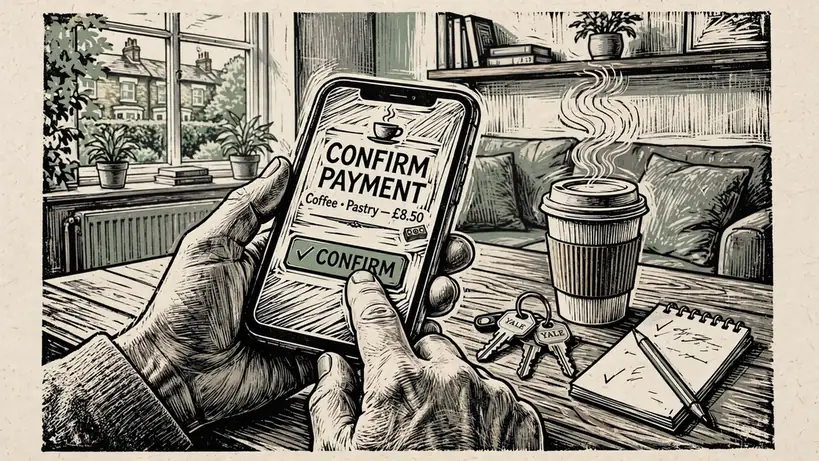
Payforit is generally intended for mobile play, but that alone does not confirm availability for every device, browser or network.
Phone-Bill Deposits Are a Mobile-Only Cashier Option
Payforit is generally reserved for mobile players. That makes the device used to access the casino an eligibility consideration: a phone-bill deposit is associated with mobile play, not simply with choosing a particular payment option from any screen. Someone comparing online casinos on a desktop computer should not assume that the same pay-by-phone facility will be available in that setting.
The distinction is between mobile access and the payment itself. Payforit’s mobile-only status describes the context in which the option is generally intended to be used. It does not, by itself, explain how a deposit is authorised, how the amount is charged, or what the charge will be. Those are separate terms. Keeping them separate avoids treating “mobile” as a complete description of the transaction.
For a mobile casino user, the relevant starting point is the device used to reach the casino account. A phone may be the natural setting for a mobile-bill casino deposit, but the general mobile-only condition does not establish that every handset, browser, operating system or network will work in every case. Nor does it mean that a payment option must appear merely because the casino website opens on a phone. Device suitability and the presence of a method are different questions.
The reverse is also important. A casino account that can be accessed on a computer is not necessarily excluded from mobile use. The mobile-only point concerns Payforit as a payment route; it does not mean that the casino itself can only be played on a phone. A player may use more than one device to access an account, while the phone-bill payment option remains associated with mobile access. The distinction is practical rather than technical: access to the gambling account and eligibility to use a particular deposit method are not interchangeable.
This matters when comparing a mobile casino pay-by-phone option with ordinary mobile play. A casino may display games on a mobile device without that fact proving anything about which payment methods the account can use. Likewise, seeing Payforit discussed in connection with a casino does not establish that a desktop cashier supports it. The mobile condition should be treated as a boundary around the method, not as a promise about the full payment menu.
Instant Bank Transfer Casinos in the UK: Payment Guide
Searches for paying a casino deposit with a mobile phone bill can also blur the difference between a phone and other ways of accessing mobile content. “Mobile” in this context points to the player’s mobile access, but the general condition does not settle whether a tablet is eligible or whether a particular browser session qualifies. Those details cannot be inferred from the mobile-only description alone. Where a device does not clearly fit the casino’s mobile environment, eligibility should not be assumed.
The same caution applies to network names. A phone may be connected through a mobile provider, but that does not establish that Payforit is supported on that network or by a particular casino. Device eligibility is not network approval. A mobile connection therefore does not turn an unconfirmed payment method into a confirmed one, and a search for a casino that accepts phone-bill deposits on a named network cannot be answered by the general rule that Payforit is intended for mobile players.
The useful conclusion is narrow. Payforit is generally a mobile-player option, so mobile access is the relevant starting condition. That condition does not reveal the payment steps, the amount available, any charges, or whether a given casino currently offers the method. Those points have to be assessed separately; folding them into the word “mobile” would make the description sound more definite than it is.
For someone considering mobile slots or other casino games on a phone, the payment method should therefore be treated as conditional on the mobile setting rather than as a feature of every casino account or every device. A desktop session should not be assumed to qualify, and a phone session should not be treated as proof that all other requirements have been met. Mobile eligibility is one part of the decision, not the whole transaction.
Check the Cashier Before Treating a Casino as an Option
A casino described as accepting Payforit is not necessarily a usable option for every account. Payment methods and their terms can vary by operator, selected method and the information shown in the live cashier. A specialist payment review can help identify what to investigate, but it cannot establish what a particular account can use now. The cashier is the practical check before a deposit decision.
Casino Payments in the UK: Methods and Deposits
The first check is whether Payforit appears among the methods available after signing in. A general payment page or an older review may describe an operator’s previous arrangements; the live cashier shows the choices currently presented to the account. If the method is absent there, a description elsewhere does not make it available. If it appears, that still leaves the transaction terms to inspect.
The listed minimum and maximum matter because they determine whether the intended deposit fits the method’s permitted range. A minimum above the planned amount makes the option unsuitable for that deposit. A maximum below the amount needed may mean the payment route cannot fund the intended balance in one transaction; it is not a reason to assume that repeated payments are permitted or appropriate. The displayed terms, rather than a generic description of phone-bill casinos, determine the decision.
Fees need the same attention. A payment option can have a cost that changes the amount charged or the value credited. The relevant figure is the one attached to the selected method in the cashier, not an assumption that paying by phone is free. If the fee is unclear, the final cost is unclear too. The arithmetic should be settled before confirming a deposit, not reconstructed from the account balance afterwards.
Account-level financial controls are a separate part of the check. The cashier or account area should make clear which limits apply and how they affect the planned deposit. New customers must be prompted to consider a financial limit before their first deposit, and the account must continue to provide access to limit-setting facilities after that point. A payment method’s own maximum does not replace a player-set financial limit: the two controls answer different questions.
The review is therefore not just “does this casino take Payforit?” It is whether the method is currently available to the account, whether the displayed minimum and maximum fit the intended transaction, whether any fee changes its cost, and whether the account’s financial controls have been considered. Those checks form one decision, even though the figures and controls may appear in different parts of the operator’s interface.
£1 Minimum Deposit Casinos in the UK: What It Means
This distinction matters when comparing online casinos that appear to offer deposits by phone bill. A list or review may be a starting point, but it cannot confirm the present terms for an individual account. Minimums, maximums, fees and processing information depend on the selected payment method and the current cashier. The same operator can present different options according to the method selected, so a figure associated with another payment route is not a substitute for the Payforit terms.
There is little value in treating a casino as an option on the strength of a payment label alone. A method that is listed but does not meet the account’s limits, carries an unaccounted-for fee or conflicts with the intended budget is not a workable choice. Conversely, a method that fits those conditions still needs to be checked in the current cashier before the deposit is made. The decision rests on the live terms, not on the name attached to the payment button.
The sensible comparison is specific: record what the cashier shows for the selected method, check that the deposit falls within its stated bounds, account for any fee, and review the account’s financial-limit settings. If any of those points is missing or ambiguous, the cost and conditions have not yet been established. An uncertain term should not be converted into a convenient assumption; that is how a small payment decision acquires an avoidable surprise.
How a Payforit Deposit Reaches the Casino Balance
A casino deposit by phone bill in the UK follows a short sequence: select Payforit in the cashier, enter the mobile number, receive a confirmation code by SMS and submit that code. The code is the step that confirms the requested deposit. Entering a number on its own does not complete the process.
Payforit is not a card form with a phone number added as a billing detail. The mobile number identifies the phone account or prepaid balance that will be charged. The SMS code then links the request to that number by requiring confirmation through the phone. Only after the code is submitted has the deposit request been confirmed.
The order matters. First, Payforit must be selected as the payment method. The cashier then asks for the mobile number to be charged. Once that number has been entered, an SMS containing a confirmation code is sent to the phone. The code must be entered in the relevant confirmation field and submitted. This final action confirms the transaction; it is not an optional notification or a code for signing in to the casino account.
£2 Minimum Deposit Casinos in the UK: What to Know
That distinction is useful when a transaction appears to have stopped part-way through. A number entered without submitting the SMS code is not the complete Payforit sequence. If the code has been submitted, the deposit has been confirmed through the payment flow. The casino balance and the phone account are separate records, so the payment route describes how the deposit is funded, not how the balance is displayed or later used.
The charge is applied differently according to the phone arrangement. On a monthly-contract phone, the Payforit deposit is added to a future phone bill. It is therefore a charge on the mobile account, rather than a deduction from a bank card entered in the casino cashier. The amount appears as part of the bill to be settled later.
For Pay as You Go, the deposit is taken from prepaid phone credit instead. There is no future contract bill to receive the charge: the available credit is the funding source. A successful transaction therefore depends on the prepaid balance being available for the requested payment. The distinction is between when and where the charge is collected, not between two different casino deposit procedures. Both use the Payforit selection, mobile number and SMS confirmation sequence.
The code also creates a point at which the transaction can be checked before confirmation. The phone receiving the SMS should be the phone associated with the number entered in the cashier. The amount and payment request should be understood before the code is submitted, because that submission confirms the deposit rather than merely asking the casino to prepare it. An SMS code should not be treated as a general-purpose casino password or shared as a substitute for completing the cashier flow.
For a player using a contract phone, the practical accounting is: the casino deposit is funded through the mobile account, and the charge is carried onto a later bill. For a Pay as You Go user, the accounting is: the casino deposit is funded from prepaid credit, reducing the balance held on the phone. In neither case is the phone number itself a source of funds; it identifies the relevant mobile account, while the code confirms the specific payment request.
£4 Minimum Deposit Casinos in the UK: What to Check
A phone-bill deposit is therefore complete only when the requested sequence has been followed and the SMS code submitted. The payment method determines which mobile balance or bill receives the charge. It does not change the basic confirmation steps, and it does not turn a mobile number into a withdrawal route. The deposit flow is narrow: method, number, code, confirmation.
The Cost and Limits of Paying by Phone Bill
Paying by phone bill puts a firm ceiling on the amount that can be credited in a single Payforit transaction. The Phone-paid Services Authority’s stated cap is £30 per transaction. A specialist payment review describes the deposit range as £3–£5 at the minimum end, with £30 as the maximum. Those figures describe a transaction boundary, not a promise that every casino will accept every amount within it.
The distinction matters when assessing the usable value of the method. A deposit below the stated minimum may not be accepted, while an amount above the transaction ceiling cannot be treated as one Payforit payment. The cap also means this route is built around small top-ups rather than a large single deposit. A player considering a larger amount would need to account for the limit before relying on phone billing as the funding route.
The £30 ceiling is not an estimate of what a casino will allow in its own cashier. An operator’s available settings may impose a lower maximum or a different minimum. The authority-level limit sets the outer transaction boundary; the operator’s terms determine what can actually be submitted there. The practical amount is therefore the lower applicable limit, not whichever figure looks more favourable in isolation.
The same distinction applies to the reported £3–£5 minimum. That range comes from a specialist review and should not be read as a universal tariff. A casino can set its own deposit conditions, and the permitted amount can depend on the payment option presented in the account. A headline range is useful for judging the scale of Payforit, but it cannot replace the amount displayed for a particular transaction.
£5 Minimum Deposit Casinos in the UK: How They Work
The cost is also not limited to the number entered as the deposit. Phone-bill payments are charged against the phone account, so the deposit has a corresponding cost outside the casino balance: it is added to a contract bill or deducted from prepaid credit. Any network charge is a separate issue and can affect the amount taken from phone credit. The amount credited to the casino should therefore not be assumed to match the final change to the phone account in every case.
For a monthly contract, the deposit appears as an addition to a future bill; with Pay as You Go, it uses existing prepaid credit. In either case, the £30 transaction ceiling does not mean that the phone account will necessarily be charged only the deposit amount. A network fee may apply, and the remaining credit or available billing capacity must be sufficient for the full charge. This makes the amount available to spend on gambling a different figure from the amount ultimately recorded against the phone account.
Credit cards are not an alternative way around the limit. UK Gambling Commission requirements bar remote gambling licensees from taking credit-card payments for gambling. That restriction also applies when a payment is routed through a money service business: changing the route does not turn a credit-funded gambling payment into an acceptable one. A casino cannot use a payment intermediary to make a prohibited credit-card deposit permissible.
This is a regulatory boundary, not a Payforit pricing rule. The £30 cap concerns the size of a phone-bill transaction; the credit-card restriction concerns the funding source used for gambling. A payment that passes through another business remains subject to the credit-card rule if it is funded by a credit card. The two constraints operate independently, so satisfying the Payforit transaction ceiling does not make a credit-card-funded payment acceptable.
For a player comparing the figures, the relevant calculation is straightforward: the intended deposit must fall within the method’s transaction ceiling and the casino’s own permitted range, while the phone account must be able to meet the associated charge. A transaction that fails any one of those conditions will not be a workable top-up. Payforit’s low ceiling is therefore a defining cost-and-limit condition, not a minor technical detail.
UK Casinos Accepting Pay n Play by Phone
Phone-Bill Acceptance Must Be Confirmed in the Current Cashier
A casino’s payment page is not a permanent record of its cashier. Payforit may appear in an older guide or review and no longer be available when a deposit is attempted. The reverse is also possible: a method can be added after a page was written. A specialist casino review is therefore a dated reference, not confirmation that phone-bill deposits are available now.
The live cashier is the relevant check. A casino name attached to a Payforit listing does not establish that the option remains active, and a general statement that an operator accepts mobile payments does not confirm that it accepts Payforit. The method needs to appear in the cashier for the account being used before the casino can be treated as a practical option.
This matters for both a casino website and its app. A page describing an operator’s payment methods may not reflect the choices currently displayed during a deposit, and a mobile interface should not be assumed to match a general description. The deciding evidence is the method shown in the current cashier, not the wording of a static promotional or review page.
A sensible comparison of casinos that accept phone-bill deposits therefore begins with confirmation, rather than a ranking. The word “best” has little financial meaning if the advertised payment route is absent at the point of use. A site may still offer other deposit methods, but that does not make it a Payforit option. Where the cashier does not show Payforit, an old listing is not a substitute.
The same distinction applies to casino apps. An app’s availability does not, by itself, establish that Payforit is enabled there. The cashier needs to be checked in the environment in which the account will be used. If the option is visible only in a separate web cashier, the app should not be described as accepting phone-bill deposits without confirmation in the app itself.
Availability is only one part of a current payment decision. Deposit and withdrawal information can change, including methods, fees, limits and processing statements. A page that correctly described a cashier at publication may become inaccurate later. That is a routine weakness of static payment claims, not evidence that a method will necessarily disappear.
The practical standard is narrow: treat Payforit as available only when it is displayed in the current cashier for the relevant account and route. If it is missing, the listing does not settle the question. If it is present, the displayed terms govern the transaction. This keeps a phone-bill option distinct from a casino’s broader claims about payments and avoids relying on information that may no longer match the live service.
What Can Replace a Phone-Bill Deposit
Payforit is not the only route for adding funds. Boku, e-wallets and Paysafecard are also identified as alternatives in specialist reviews, but a method’s presence on a general payment list does not establish that a particular casino accepts it. The operator’s cashier is the relevant record for the account and deposit being considered.
The alternatives differ in what the player needs to use them. Boku is another pay-by-mobile option, while an e-wallet requires a separate wallet account. Paysafecard uses a prepaid voucher rather than a charge added to a phone account. These are not interchangeable arrangements: the funding source and the steps before a deposit can proceed depend on the selected method. Their availability should therefore be assessed separately, not inferred from the fact that one phone-based option is shown.
A debit card is a more direct comparison for players who want to fund a casino account without adding the amount to a mobile account. A specialist payment review describes debit-card deposits at UK casinos as free and more widely accepted than Payforit. That is a comparative finding, not a guarantee for every operator or account. Visa and Mastercard may appear in payment information, but the live cashier determines whether a specific card can be used.
Credit cards are not a substitute. UK Gambling Commission rules prevent remote gambling operators from accepting credit-card payments for gambling, including where a money service business routes the payment. A debit card and a credit card are therefore not equivalent choices simply because both carry a card brand.
The practical comparison is between the method available in the cashier and the conditions attached to it. A phone-based alternative may still require mobile-network support; an e-wallet depends on having access to that wallet; and a prepaid voucher depends on the casino accepting it. A debit card may have broader acceptance and no deposit fee according to specialist review evidence, but neither point removes the need to check the operator’s own terms. Availability, charges and account restrictions can differ, so the payment option should be confirmed before funds are committed.
Why a Phone-Bill Deposit Does Not Fund a Withdrawal
Payforit moves money into a casino account; it does not provide a route for taking casino funds back out. A deposit made through a mobile phone bill or prepaid phone credit therefore cannot be reversed into a cash withdrawal. The withdrawal needs to be arranged through a separate payment method supported for that account.
This distinction matters when comparing slot games that accept pay by phone. A phone-bill option can make a deposit possible without establishing how a later payout will be sent. Deposit and withdrawal functions are separate cashier terms, not two directions of the same transaction.
A specialist payment review describes possible withdrawal routes at UK-licensed casinos as debit cards, bank transfers, PayPal and e-wallets including Skrill and Neteller. That list is not confirmation that every route is available at a particular casino or for a particular account. The live withdrawal cashier is the relevant check: it shows the methods the operator currently offers for that account. The selected method, limits, fees and processing arrangements can differ, so a deposit method should not be treated as evidence of a matching payout route.
A Payforit user consequently needs another verified payment source for withdrawals. Before depositing, the payout route should be checked alongside any account verification requirements and the operator’s current terms. If the available route requires a bank account, debit card or e-wallet, the account holder must have access to that route; phone credit alone does not fulfil the withdrawal requirement.
The practical calculation is simple: a phone-bill deposit creates a casino balance, but not a cash-out channel. A suitable withdrawal method must be confirmed separately before funds are committed. This applies whether the deposit is intended for slots or another casino game; the game type does not change Payforit’s role as a deposit method.
Network Fees Can Change the Amount Taken from Phone Credit
A Boku deposit can draw more from phone credit than the amount shown as the casino deposit. A mobile network may add a processing fee, and a specialist review notes that its amount can depend on both the network and the tariff. The amount credited to the casino and the total deducted from the phone account are therefore separate figures.
For a transaction to proceed, the available phone credit must cover the deposit and any applicable network fee together. If the balance covers the deposit alone, the payment may not complete. This matters particularly on Pay as You Go, where the available credit is a fixed balance rather than a charge added to a later bill. On a monthly contract, the fee may affect the amount billed, subject to the applicable tariff.
A Vodafone or giffgaff customer considering pay by phone at a casino should treat the network charge as a tariff-specific cost, not assume that one fee applies to every account under the same brand. Boku support and the charge can depend on the current payment arrangements; neither can be inferred from the network name alone. The casino cashier and the network’s current tariff information are the relevant places to establish the terms for an available transaction.
The useful calculation is straightforward: compare the full amount that may be taken from phone credit with the balance available, not merely the casino’s stated deposit value. If a fee applies, the difference reduces the credit left after payment. If no fee is charged, the deduction may match the deposit amount; that outcome should not be presumed without checking the applicable terms.
Because network tariffs and payment arrangements can change, an older description of a fee is not a reliable basis for estimating a current Boku transaction. The charge is not an incidental detail: it changes the total cost of funding the casino balance.
A Phone-Bill Top-Up Still Sits Within a Deposit Limit
A phone-bill top-up is not an open-ended way to fund a casino balance. A specialist payment-method review reports a £30 ceiling for each Payforit transaction, attributed to the Phone-paid Services Authority. That sets the outer boundary for a single top-up; it does not establish how much an individual account should deposit or how often to do so.
The account’s financial limit is a separate control. New remote customers must be prompted to consider setting one before making their first deposit. Limit-setting facilities must remain accessible afterwards, so the amount can be reviewed as circumstances change. The transaction cap and the account limit perform different jobs: one restricts the size of a Payforit payment, while the other governs deposits at account level.
A top-up that falls below the transaction ceiling can still exceed the amount allowed by an account’s own controls. If the account limit is lower, that limit is the relevant boundary. The available headroom should therefore be considered before a phone-bill deposit is initiated, rather than treating the payment cap as a spending target.
For budgeting purposes, the £30 figure is a per-transaction maximum, not a recommended deposit. A smaller payment still counts towards the account’s financial limit. The practical amount available is the lower of the permitted Payforit transaction value and the remaining account limit. That calculation is simple; the controls matter because the two ceilings are not interchangeable.
Three and Boku: Confirm Support Before Depositing
A Three customer cannot assume that Boku will appear as a payment option at a particular casino. Network access and casino acceptance are separate conditions; the relevant test is whether Boku is listed in that casino’s live cashier for the account being used. A reference elsewhere to pay by phone at a casino does not establish that Boku is currently supported for Three.
The cashier should also show the terms attached to the option before a deposit is started. A specialist payment review describes Boku’s standard maximum as £30 per transaction. That figure is a ceiling, not evidence that every casino permits a deposit at that amount or that the method is available on every network. The amount offered in the live cashier is the operative one.
Boku requires SMS confirmation before the funds move. The text confirmation is therefore part of authorising the transaction, not merely a notification received afterwards. If Boku is absent from the cashier, or the displayed terms do not fit the account, there is no basis for treating the method as available.
For a Three account, the practical check is specific: confirm that Boku is presented in the current cashier, review the transaction terms shown there, and proceed only if the SMS confirmation corresponds to the intended deposit. Neither a general mention of Boku nor the network name alone settles acceptance.
Is there a maximum deposit amount with Payforit at UK casinos?
Yes. Payforit deposits are capped at £30 per transaction.
Which UK casinos still accept Payforit in 2026?
Payforit is listed as available in the cashier at Kwiff, NetBet, JackpotJoy and Virgin Games. Check the live cashier after signing in to confirm it is available for your account.
What are the withdrawal limits when using a Payforit casino?
Payforit cannot be used to withdraw casino funds. UK casinos may offer withdrawals by debit card, bank transfer, PayPal or an e-wallet, and the applicable limits are shown in the live cashier.
What is the maximum I can deposit with Boku at a UK casino?
Boku deposits are capped at a standard maximum of £30 per transaction.
Do UK casinos offer welcome bonuses for Payforit deposits?
Most UK casinos exclude Payforit deposits from welcome bonuses and other promotions.