
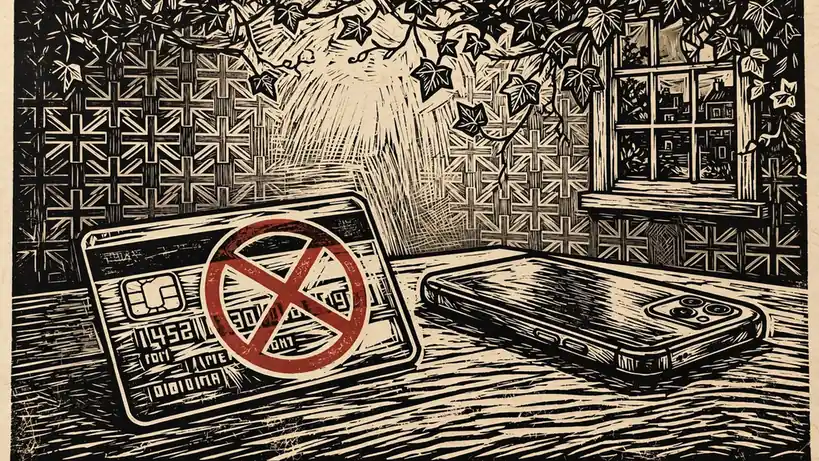
UK-licensed casinos cannot accept credit cards for gambling, while debit cards and other payment methods follow different rules.
The UK Credit-Card Gambling Ban: What Changed and What Still Applies
Credit-card payments for gambling have been prohibited at UK-licensed casinos since 14 April 2020. The UK Gambling Commission introduced the restriction, and it remains in force. A casino cannot treat a credit card as an acceptable way to fund gambling simply because the payment is processed online or the customer has an account with the operator.
The change established a firm boundary between casino payments and borrowing on a credit card. It did not make all online gambling unlawful, nor did it remove the need for operators to hold the appropriate UK licence. Real-money casino services offered to customers in Great Britain must be provided by a remote gambling licensee authorised by the Gambling Commission. The licence requirement applies to operators selling into the British market, not only to companies based in Britain.
That distinction matters because a site’s payment options cannot override the rules attached to its licence. UK-licensed casinos are not permitted to accept credit-card payments for gambling. The prohibition is not a temporary operator policy or a condition that can be switched off by selecting a different casino game. The 2020 rule has not subsequently been relaxed.
The relevant legal geography is Great Britain: the Gambling Act 2005 covers England, Wales and Scotland, but not Northern Ireland. For customers in Great Britain, remote gambling businesses serving the market need the relevant Gambling Commission licence. A casino’s own description of its services does not establish that it holds one. The legal position depends on the operator’s authorisation, while the credit-card restriction applies to licensed gambling activity.
The ban concerns credit-card payments made for gambling; it does not amount to a general ban on credit cards or casino entertainment. It is therefore possible to discuss a card as a payment product without implying that every card payment is permitted for gambling. The decisive point here is narrower: a UK-licensed casino cannot accept credit-card funds for that purpose.
Casinos That Accept Debit Cards in the UK
The rule also remains relevant when a transaction is presented as something other than a direct card deposit. Its scope is not erased by changing the description attached to a gambling payment. The detailed treatment of indirect payment routes is a separate question, but the underlying restriction is still the same: credit-card payments for gambling are not an available funding basis at a UK-licensed casino.
For practical purposes, the answer to whether credit cards are allowed for gambling in the UK is no at UK-licensed casinos. The date is fixed, the rule remains active, and a casino cannot offer an exception to it while operating under a UK Gambling Commission licence. That is the regulatory position, rather than a preference about which payment methods an individual operator chooses to list.
Can a Credit Card Be Used at a UK Online Casino?
No. A credit card cannot fund gambling at a UK-licensed online casino, whether the card is entered directly in the cashier or used through an intermediary. The rule concerns the source and purpose of the payment, not just the button selected at checkout.
That distinction matters when a transaction is routed through a money service business. Sending credit-card funds to such a service and then using its payment route to make a casino deposit does not turn the original credit into an acceptable gambling payment. Remote gambling licensees cannot accept credit-card payments for gambling through a money service business.
The same principle applies to wallets. A wallet is not a workaround if it allows credit-card funds to be used for gambling: a UK-licensed casino cannot accept that wallet payment. Moving money between accounts may change the visible payment route, but it does not remove the restriction on credit-card funding. A payment route should not be treated as permitted merely because the casino cashier displays it.
This answers the practical question of whether someone can deposit at an online casino with a credit card in the UK: not at a UK-licensed site. The same applies to online gambling more broadly, including casino games and slots. A casino deposit is a gambling payment even if the card transaction is first described as a wallet top-up or transfer.
Attention Credit-card payments for gambling are prohibited at UK-licensed casinos. This restriction has been in force since 14 April 2020 and remains active.
Payment screens can still cause confusion. A cashier may display a card brand or a wallet logo without establishing that every card product or funding source is eligible. The relevant distinction is between credit-card funds and a permitted source of payment. A route that is technically visible is not necessarily available for every customer or every funding source; the operator must not accept credit-card money for gambling through the routes covered by the rule.
A failed or declined attempt should not be followed by changing the route to disguise the funding source. Using a money service business or an eligible-looking wallet does not make credit-card gambling payments acceptable where the card funds remain available for that gambling transaction. The prohibition is not limited to a direct card number entered in a casino account.
For a casino serving Great Britain, the operator must hold the relevant UK Gambling Commission licence. UK-licensed remote operators are required to apply the credit-card restriction to gambling payments, including those routed through a money service business. The regulator introduced the ban on 14 April 2020, and it has not been relaxed.
The practical test is therefore not whether a checkout page accepts a card number or whether a wallet can hold money. It is whether the proposed deposit uses credit-card funds for gambling. If so, the route is not permitted at a UK-licensed online casino. A credit-card payment may work for an unrelated purchase, but that does not make it an acceptable way to fund casino play.
This route-based distinction also avoids confusing credit with other card payments. The restriction is specifically on credit-card payments for gambling and on covered attempts to route those funds through intermediaries. The cashier’s labels alone do not settle the issue: the source of the funds and the payment’s use both matter.
Credit-Card Casino Claims and UK Site Availability
A website claiming that it accepts credit cards for casino play is not, on that basis, a UK-licensed casino. Remote gambling licensees serving customers in Great Britain must hold the relevant Gambling Commission licence, wherever the business is based. A claim of credit-card access therefore needs to be read alongside the operator’s regulatory status, not as proof that the site is a lawful UK option.
Casinos That Accept Wirecard in the UK: Payment Checks
The distinction matters because a site can be reachable from the UK without being authorised to serve the British market. Offshore casinos are outside the UK Gambling Commission’s licensing system. Their availability to UK residents does not give them a UK licence, and a payment-method banner does not change that. Online gambling in the UK is legal only through licensed and regulated sites.
A casino advertising credit-card deposits may be aimed at customers in other jurisdictions, may describe a payment route that is not available to UK customers, or may be operating without the licence required to serve Great Britain. The claim alone does not establish which explanation applies. What it does not establish is that credit-card payments for gambling are permitted at a UK-licensed casino.
This also applies to pages using phrases such as “credit-card casino not on GamStop”. Being outside a self-exclusion scheme is not evidence of UK authorisation. Nor does a site’s accessibility, branding or payment list confirm that it holds a current UK operating licence. The relevant check is the operator’s entry on the UK Gambling Commission public register. An absent or mismatched licence entry cannot be repaired by a polished cashier page.
The UK market has a clear boundary: operators offering real-money gambling to customers in England, Scotland and Wales require a UK Gambling Commission licence. A foreign licence is not a substitute for it. That does not mean every offshore site is blocked from view; practical access and legal authorisation are separate questions. Advertising rules also restrict promotion of gambling services to operators licensed locally, so promotional claims should not be mistaken for regulatory confirmation.
What a payment list can and cannot show
Payment information can be less straightforward than a logo suggests. A specialist review may list Visa and Mastercard among the methods shown by casinos, but that does not confirm that either is currently available to UK customers at a particular site, or that every card product is eligible. The cashier is the place where current availability and card-product eligibility are shown for the account in question.
Jeton casino sites in the UK: what to check
Even there, the displayed method is not a licence check. A cashier can describe what the operator’s system accepts; it cannot establish that the operator is authorised to offer gambling to customers in Britain. Conversely, the presence of familiar payment brands on a UK-licensed casino’s information pages does not mean credit cards can be used for gambling deposits. The payment name and the card product both matter, and the UK restriction remains in force for credit-card gambling payments.
That distinction explains why lists of “UK casinos that accept credit cards” can mislead. A page may combine licensed UK sites and offshore sites, use “card” without specifying debit or credit, or present a method list that is not tailored to UK customers. Those are materially different claims. A credit card advertised somewhere on a site is not evidence that it can lawfully fund gambling at a UK-licensed operator.
A site claiming to offer credit-card casino access should therefore be assessed first by its licensing status, not by the number of payment logos, the apparent ease of registration or the wording of its promotion. A UKGC licence establishes the operator’s place within the British regulatory system; a payment claim does not. Any UK-facing offer that depends on treating those two things as interchangeable has already blurred the important part of the transaction.
Credit-Card Casinos: What “Best” Can Mean in the UK
“Best” cannot mean a UK-licensed casino that takes credit-card payments for gambling. A comparison based on that condition has no valid UK-licensed option to rank. The useful comparison is among payment terms that the casino actually makes available, with the focus on whether a route works for the intended transaction and what it costs.
Availability needs to be checked in the casino’s cashier, not inferred from a general payment logo or an old review. A method may be shown on an information page but unavailable for a particular account or transaction. The cashier is where the available route and its conditions become relevant. A credit-card search may also surface offshore sites; that does not make those sites UK-licensed choices. The UK regulatory system requires remote gambling licensees serving the British market to hold the relevant UK Gambling Commission licence.
Payment Comparison
- Availability must be checked in the casino’s cashier.
- Confirm whether the method supports both deposits and withdrawals.
- Consider the total cost, including exchange rates and provider fees.
Withdrawal support is a separate comparison point from deposit access. A method that can fund an account is not automatically a route for receiving a payout. Before treating a payment option as suitable, its deposit and withdrawal functions should both be established from the operator’s terms or cashier. Where the conditions are unclear, the apparent convenience of a deposit says little about the full payment arrangement.
Cost requires more than looking for a visible casino fee. The total can include charges from the casino, payment provider, card issuer or bank, currency conversion and, where relevant, network costs. A currency spread may be less obvious than a flat charge and still affect the final amount. There is no single payment route that can be called the cheapest in every case: the comparison depends on the amount, the provider’s terms and the currency used.
A specialist payment review reports that some casino pages list GBP support. That should be treated as a point to verify, rather than an assurance that every account will transact in pounds. Account currency should be confirmed before the first payment; if the account and payment are handled in different currencies, conversion may add a cost. The relevant figure is the amount that leaves the payment account compared with the amount credited, not just the fee displayed beside the method.
A practical ranking therefore has three tests: the route is currently available in the cashier; its role in deposits and payouts is clear; and the total cost is understandable for the intended amount and currency. A method that fails any of these tests is not made “best” by a prominent logo or a headline promising easy payments. Those are presentation; the terms determine the result.
For searches about credit-card slots or casinos outside GamStop, the same comparison logic does not change the UK boundary. Credit-card gambling payments are not an eligible funding route at UK-licensed casinos, and a site’s payment claim does not establish that it holds a UKGC licence. The useful question is therefore not which casino can be ranked as the best credit-card option, but whether a lawful payment route is available and transparent on the operator’s actual terms.
Casinos That Accept Citadel in the UK: How to Check
Online Casinos That Accept Card Deposits: Credit and Debit Are Not the Same
A card logo does not identify the source of funds. At a UK-licensed online casino, a debit card and a credit card are treated differently for gambling payments, even when both carry the Visa or Mastercard name. Debit cards are commonly accepted; credit-card payments for gambling are not.
The distinction is practical as well as legal. A debit-card payment draws on money held in the linked bank account. A credit-card transaction uses borrowing from the card issuer. The cashier therefore needs to establish not only which card network is involved, but also whether the specific card product is eligible. Seeing a familiar logo on a payment page does not settle that question.
UK casinos commonly accept debit cards issued on Visa and Mastercard networks. That makes a debit card a possible deposit route where the operator offers it and the particular card passes its checks. It does not mean every Visa or Mastercard will work: the bank, card type, account status and operator’s payment setup can affect acceptance.
A specialist review may list Visa and Mastercard among a casino’s payment methods, but that listing is not confirmation that every card product is available to UK customers. The operator’s cashier is the relevant check for current availability and eligibility. If the cashier does not offer the card route, or the transaction is declined, the network logo alone provides no basis for treating it as supported.
For the same reason, “card deposits” is too broad a description when comparing payment options. It can refer to debit-card access, not permission to fund gambling with credit. A page that says it accepts cards may be describing debit cards only, or may not make the product distinction clear. The payment method’s label should be read alongside the terms shown in the cashier.
This distinction also matters when a card is linked to a bank account or payment service. The relevant question is the source of the funds used for gambling, not simply whether the transaction appears card-based. A debit card linked to available account funds is not interchangeable with a credit card merely because the payment passes through the same network.
For UK players looking for a card-funded casino account, the accurate description is therefore an online casino that accepts eligible debit cards. A UK-licensed casino cannot accept a credit card for a gambling deposit. Any claim of card acceptance should be checked against the payment options available in the UK cashier and the precise card product—not inferred from a brand mark, a general site description or a card’s physical appearance.
UK Casino Sites That Accept EcoPayz: What to Check
Depositing at an Online Casino Without a Credit Card
A UK-licensed casino’s cashier may offer several ways to fund an account without using a credit card. The practical difference is not just how money enters: some methods support withdrawals, while others are deposit-only or may come with promotion exclusions. Availability also varies by operator, account and payment provider, so a method appearing on a general payment list is not confirmation that it is available for a particular account.
Debit cards are a direct alternative. UK casinos commonly accept Visa and Mastercard debit cards, although the cashier determines which card products are eligible. A deposit can be straightforward, but a card option should not be assumed to work for every card or every transaction. Payment details should belong to the same customer as the casino account; mismatched ownership information can create avoidable friction.
Open banking and bank transfers move money from a bank account rather than a credit facility. A specialist payment-method review reports that these routes can provide instant deposits and fast withdrawals at many sites. That is a reported capability, not a timing guarantee: the actual route, bank and operator matter. Before selecting it, the cashier’s terms should be checked for both incoming payments and withdrawals, along with any instructions for authorising the transfer.
E-wallets can sit between a bank account and a casino account, but their status is operator-specific. Skrill and Neteller are available at some sites; a specialist casino-payment review also notes that these services are often excluded from promotions. That makes the bonus terms part of the payment calculation: a deposit route may be accepted while still making a particular offer unavailable. The cashier and promotion conditions need to be read together, not as separate promises.
Prepaid vouchers have a narrower role. Paysafecard is a prepaid voucher for deposits only, so it does not provide a route for receiving a casino payout. A separate withdrawal method may be required, and the casino’s payment rules determine what can be used. That distinction matters before funds are added: a method that works for depositing does not necessarily complete the account’s full payment cycle.
Casinos that accept Upaycard in the UK: how to check
The same check applies to other options shown in a cashier. A named provider may be listed generally but unavailable for a particular customer, or may support only one transaction direction. Account currency also affects the amount ultimately credited if a conversion is involved; the displayed deposit value and the amount leaving a bank or provider account are not automatically identical.
UK anti-money-laundering controls commonly require a payout to return to the original payment source. Where that is not possible, the operator may require another route and further checks. This is why a deposit-only voucher or a transfer method that cannot receive withdrawals should not be treated as a complete cash-in-and-cash-out solution. The casino’s terms should identify how any remaining balance can be paid.
A sensible comparison therefore has three parts: whether the method is available in the cashier, whether it supports the required direction of payment, and whether its promotion terms or payout rules change the result. The minimum deposit can also depend on the selected method, so the amount shown at the point of payment is more useful than a general figure. A route that looks simple at deposit can still be an incomplete choice if it leaves withdrawal arrangements unresolved.
Deposit Amounts, Account Limits and Payment Costs
The minimum deposit is not a fixed market-wide figure. A specialist payment review reports that the entry amount commonly falls between £10 and £20, with the payment method affecting the minimum. The amount shown in the cashier is the operative term: a site’s advertised starting figure may not apply to every route.
A low minimum does not establish how much can be deposited in a single transaction or across an account. A specialist review notes that maximums can differ by payment method and account status, and may apply separately to each transaction, a day or a month. The relevant limit is therefore the one displayed for the selected route and account, not a headline amount copied from a general payment page.
The cost calculation also needs to match the amount being deposited. A specialist payment review identifies possible charges from the casino, payment provider, card issuer or bank, together with currency-conversion spread and network fees. A route with no visible flat charge is not automatically cheaper: the exchange rate can contain a spread whose cost exceeds a stated fee. Comparing only the cashier’s fee leaves part of the calculation out.
DO
- Check the casino cashier for current availability.
- Verify the total cost including conversion and network fees.
- Confirm the account currency before the first transaction.
DON’T
- Rely on general payment logos or old reviews.
- Assume a method is available for both deposits and withdrawals.
- Ignore the impact of currency conversion spreads.
For a like-for-like comparison, the total cost is the casino charge plus any provider, issuer or bank fee, conversion cost and network cost that applies to the transaction. Some components may be shown before confirmation; others may depend on the payment account or provider’s terms. The final amount debited, rather than the deposit credited, is what determines the transaction’s cost.
Currency matters as well. Specialist payment-page reviews report GBP support on the pages they examined, but that does not settle the currency assigned to every account. Confirm the account currency before the first transaction. If a deposit is converted, compare the rate and resulting cost before submitting it; a small-looking fee can be secondary to the exchange-rate spread.
There is no universally cheapest payment method. The result depends on the casino’s charge, the provider’s terms, any bank or issuer fee, conversion and network costs, all applied to the intended deposit. A useful comparison records the amount leaving the account, the amount credited and each charge or conversion shown. If those terms are unclear in the cashier or payment conditions, the lowest advertised minimum says little about the actual cost.
Are Credit Cards Allowed at UK Online Casinos?
No. Credit-card payments for gambling are not permitted at UK-licensed online casinos. The restriction has applied since 14 April 2020 and remains in force. A casino operating under a UK Gambling Commission licence cannot treat a credit card as an acceptable way to fund play.
That answer sits alongside a separate requirement about financial controls. Before a new customer makes a first deposit, the remote gambling licensee must ask them to set a financial limit. The account must also provide accessible controls for managing limits. These measures govern how money is managed within the account; they do not create an exception to the credit-card restriction.
The distinction matters because a permitted deposit route and a financial limit address different risks. A limit is an account control, not approval to use a prohibited funding source. Equally, a card being displayed somewhere in a payment interface does not establish that credit-card funding is allowed for gambling. The relevant status is whether the payment is made with credit, not merely whether the instrument is called a card.
For a UK online casino, the practical position is therefore straightforward: credit cards cannot fund gambling, while the required limit prompt and account-level controls apply independently. An operator cannot replace one requirement with the other.
Casinos That Accept eCheck in the UK
The financial limit should be considered before a deposit is made, rather than treated as a setting to revisit only after spending has begun. The account controls make it possible to manage that limit during the relationship with the casino. Neither step changes the payment rule, which has not been relaxed since the regulator introduced it.
A claim that a UK-licensed casino accepts credit-card gambling payments would conflict with the current restriction. The relevant distinction is not a special casino policy or a selectable account setting; it is the boundary on which payment methods a licensed operator may accept for gambling.
Paying In and Cashing Out: The Same Route Matters
A casino deposit and a withdrawal are separate transactions, even when the same payment method appears in the cashier for both. UK anti-money laundering rules generally require a payout to go back to the original payment source. This closed-loop approach helps establish where funds came from and where they are being returned.
That can affect a withdrawal when the original account is no longer available, or when the requested destination belongs to someone else. An alternative route may be possible, but it can trigger additional checks before the casino releases the funds. Using account details and a payment route in the same customer’s name reduces avoidable friction over ownership. The payment record and the account record should agree; a mismatch is an administrative problem, not a shortcut.
Timing also has more than one stage. A payment provider’s transfer time is only part of the wait: the casino must first approve the withdrawal. A specialist review notes that first withdrawals may take longer while verification is completed. That means a quick deposit does not establish how quickly a payout will arrive. A card payment can clear into the casino account promptly, while the withdrawal still waits for internal approval and any outstanding KYC checks.
Before depositing, the cashier’s withdrawal terms matter as much as its deposit options. They should identify whether the same source is used for payouts, what happens if it cannot receive funds, and whether another route requires further verification. Withdrawal speed depends in part on the casino’s approval process and whether the account is fully verified. Completing checks before a withdrawal is requested can reduce one source of delay, but it does not remove the operator’s review or the payment provider’s processing time.
A workable payment route is therefore one that supports the account’s full transaction path, not merely the initial deposit. Where the payout must return to the source, a method that is deposit-only cannot complete that path by itself. The final amount received and the time it takes depend on approval and processing, not on the deposit screen alone.
Playing Slots Without Credit-Card Funding
A slot session does not create an exception to the restriction on credit-card payments for gambling. The UK regulator introduced the ban on 14 April 2020, and it remains in force. Remote gambling licensees cannot take credit-card funds for slot play, whether the card is presented directly or its funds are routed through a money service business. A wallet is not a workaround where it allows credit-card funds to be used for gambling.
That restriction concerns how gambling is funded, not whether slots can be played at a UK-licensed casino. Eligible customers can use payment methods the operator permits, subject to the cashier’s terms and account checks. Age verification must be completed before funds can be deposited. The payment route does not change the rules governing the game itself.
Slot-session rules in Britain
Online slots in Britain have specific limits on how a session may operate. The maximum stake is £5 per game cycle for adults, following the change that took effect on 9 April 2025. This is a ceiling, not a recommended stake or a promise that every game offers a stake at that level. The applicable amount is per game cycle; it is not a session budget.
Autoplay is prohibited for online slots, so spins cannot be set to run automatically. Each spin must last at least 2.5 seconds. These constraints apply to the play mechanics independently of the payment method. A faster funding route cannot shorten a spin, and a permitted stake does not make credit-card funding acceptable.
The useful distinction is therefore between slot access and payment eligibility. A UK-licensed casino may offer online slots, but credit-card payments for gambling remain unavailable. Before depositing, the cashier’s listed methods determine which non-credit route the account can use; the slot rules then govern stake size and how each spin proceeds. The mechanics are fixed conditions, not optional features of a payment choice.
Are Visa and Mastercard deposits definitely debit cards?
No. Visa and Mastercard are card brands, not proof that a card is debit; UK casinos commonly accept debit cards, but credit-card funds cannot be used for gambling at UK-licensed casinos.
Can I use a credit card at 333 Casino in Great Britain?
No, if it is operating as a UK-licensed casino: credit cards cannot be used to fund gambling, including through a wallet or money service business.
What is the fastest withdrawal method for UK casinos?
PayPal, open banking services and debit cards linked to fast payout systems are generally among the quickest. Actual speed also depends on the casino’s approval process and whether your account is verified.
Do UK casino withdrawals require verification?
Verification may be completed before a first withdrawal, and payouts can take longer while checks are completed. Using a payment route and account in your own name can help avoid unnecessary ownership-related delays.